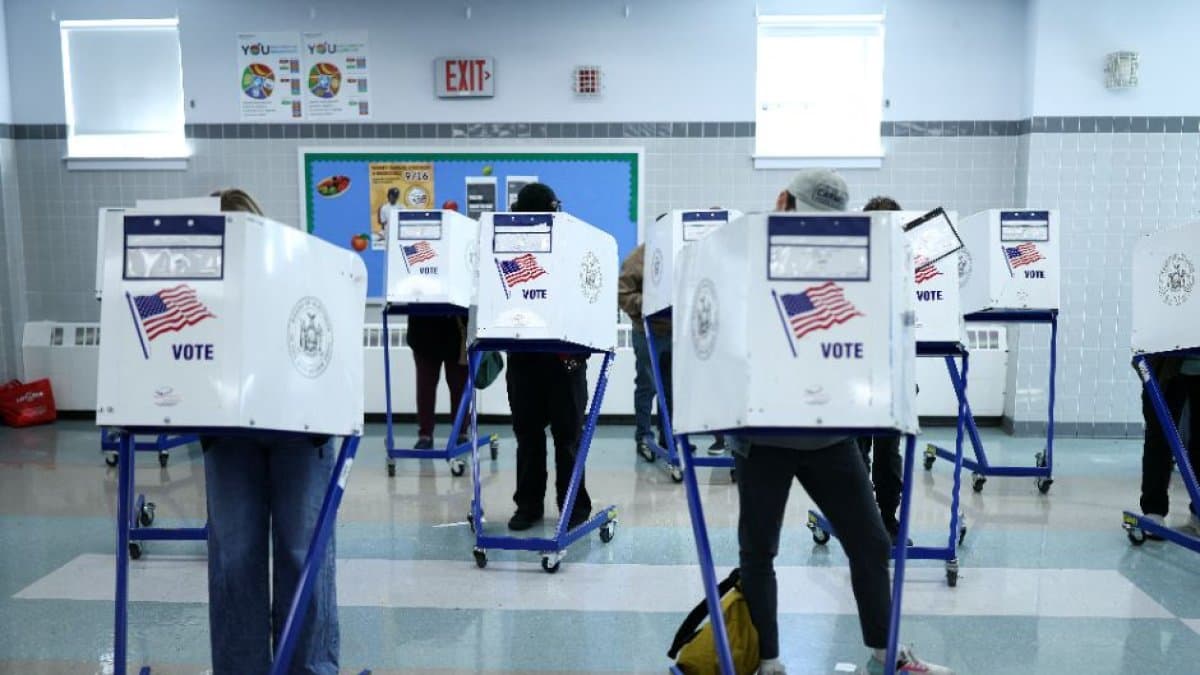







Israel elections: Netanyahu's Likud party remains in the lead as the vote count continues, but there is no clear majority to form a government
Neither of the two competing blocs can claim victory, but Netanyahu appears to be in a better position than Eisenkot for the negotiations

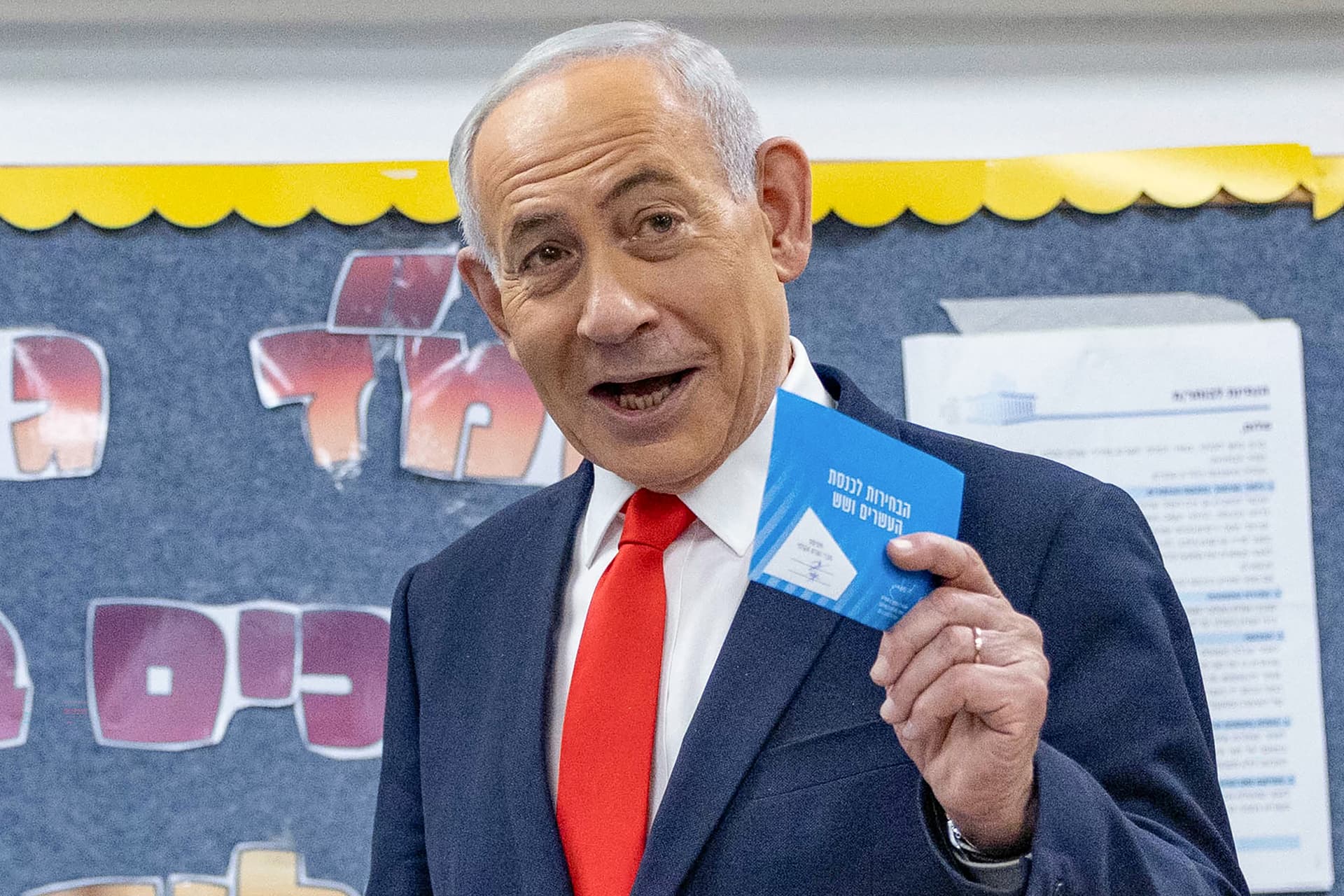
Benjamin Netanyahu

Israeli Prime Minister Benjamin Netanyahu’s Likud Party had 828,972 votes (20.68%). after 4,026,049 votes had been counted at 8,702 voting stations, the country’s Central Elections Committee said in an update at 10:01 a.m. on Wednesday.
Together with United Torah Judaism (240,648, 6.00%), Otzma Yehudit (220,798, 5.51%), Shas (217,202, 5.42%) and Religious Zionism-Zehut (196,346, 4.90%), Netanyahu’s bloc stood at 1,703,966 votes, or 42.51%.
Gadi Eisenkot’s Yashar was second with 640,241 votes (15.97%). Its allies are B’Yachad (353,717, 8.83%), the Democrats (254,429, 6.35%) and Yisrael Beiteinu (239,040, 5.96%). The four parties had a combined 1,487,427 votes, or 37.11%.
Under these circumstances, the ruling coalition would win 53 seats—8 short of the number needed to secure a majority in the legislature (Knesset) and 14 fewer than it currently holds. On the other hand, the anti-Netanyahu coalition would fall even further short of a majority, with just 48 seats, while the Arab parties (Raam and the United List) would see a significant increase, reaching 19 seats—9 more than they currently hold.
Yair Golan says opposition bloc should work with Arab parties
Yair Golan, the head of Israel's main left-wing party, called on Wednesday for his opposition allies to work with Arab parties to unseat Netanyahu, as partial election results showed their support would be crucial to reaching a governing coalition.
"We must no longer accept Netanyahu's racist division between Jewish votes and Arab votes," he said on X. "We have a responsibility. And we have an opportunity to form a government of change in partnership with Israel's Arab citizens."
IDF voter turnout reaches 79.9%
More than 890 military polling stations operated at bases and units nationwide and in combat zones, about a quarter of them mobile.
Early voting began on Oct. 21 to accommodate operational requirements.
🛠 Do you think there is an error in this article?
Recommendations








LATEST