







A coastal storm threatens the eastern part of the country, while the Southwest faces a risk of flash flooding
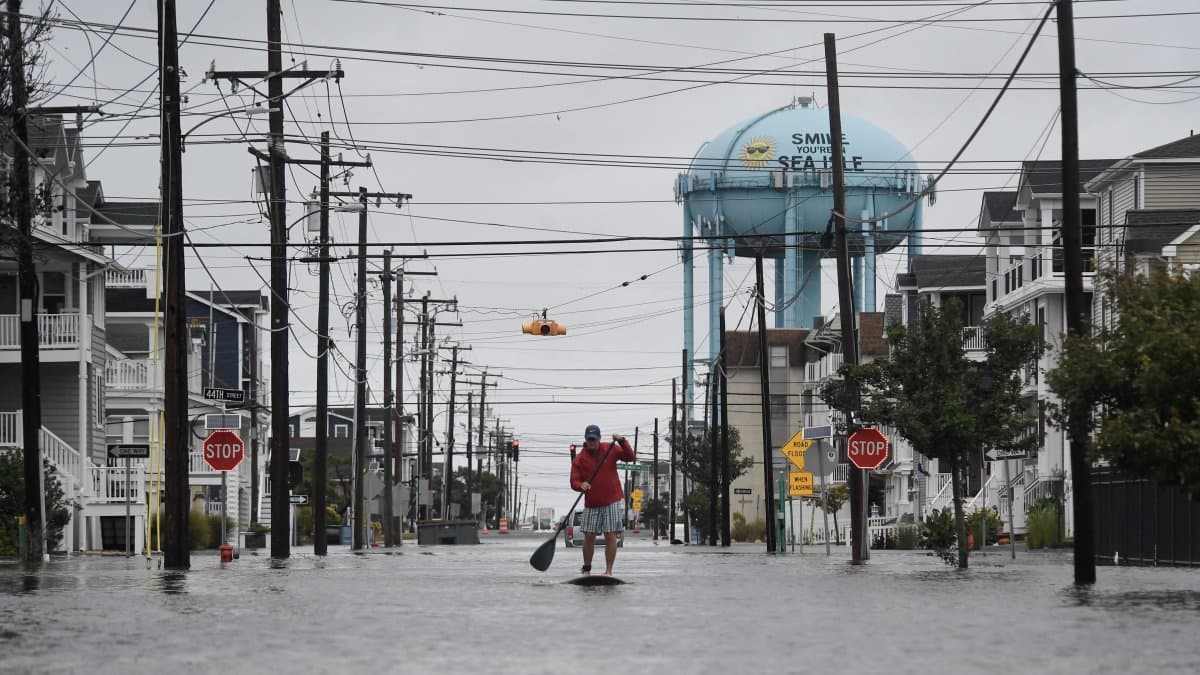
A low-pressure system off the Atlantic coast threatens to bring strong winds, dangerous waves and coastal flooding, while weather authorities warn of possible flash flooding in the southwestern part of the country.

Rain in Coney Island, Brooklyn, NY - Reference Image

The National Weather Service (NWS) reported Monday that an extratropical storm, known as a nor'easter, continues to strengthen off the Carolinas and is moving northward across the Atlantic. The storm will bring rain to parts of the mid-Atlantic and Northeast coasts through at least Tuesday, with adverse sea conditions that could last through Wednesday.
The most significant warnings affect areas of North Carolina, Virginia, New Jersey, New York and Massachusetts, where strong winds and high waves are expected.
Off the coast of New York, the NWS forecasts gusts of up to 45 knots, approximately 83 kilometers per hour, and waves ranging from 3 to 4.6 meters. Authorities have issued marine storm warnings from Monday afternoon through Wednesday morning.
Coastal flood warnings are also in effect in Virginia and North Carolina. In Newport News, authorities are forecasting water accumulations of up to 12 inches in low-lying areas, with the possibility of reaching between 12 and 24 inches over the next few days. Some roads, parking lots and properties near the coastline could be affected.
Meanwhile, the U.S. Southwest faces a localized risk of flash flooding. The Weather Prediction Center (WPC) has issued a marginal risk advisory for excessive rainfall for parts of southeastern Arizona and southwestern New Mexico.
The storms could produce intense rainfall over short periods, which is especially dangerous in urban areas, canyons and areas previously affected by wildfires.
On the West Coast, another low-pressure system will bring scattered rain to California through Tuesday, according to federal forecasts.
In Florida, authorities are also maintaining warnings for strong rip currents and high waves along several sections of the Atlantic coast. In Volusia, Brevard, Indian River, St. Lucie and Martin counties, waves of approximately 6 to 10 feet are expected, creating dangerous conditions for swimmers and small boats.
The NWS recommends avoiding water activities in areas under alert, paying attention to possible coastal road closures, and following updates from local emergency agencies.
🛠 Do you think there is an error in this article?
Recommendations








LATEST